
By controlling outgoing cash in real time, you maintain more working capital for critical needs. This simple forecast reveals exactly when you’ll face shortfalls, letting you take action before problems hit. You’ll know which weeks need extra attention and can time major purchases or investments when cash is strongest.
Challenges and Limitations of AR Days
The specific type of debt repayment also offers insight into management discipline. Conversely, voluntary prepayments signal management confidence in future cash flow generation, allowing them to proactively reduce interest expense. On the other hand, a negative cash flow to creditors raises concerns among creditors. It suggests that a company may be struggling to generate enough cash to service its debts, which could lead to default or bankruptcy. Creditors closely monitor cash flow to creditors as a key indicator of credit risk.
- The firm is effectively borrowing to stay afloat, rather than borrowing to invest in high-return assets.
- A higher debt-equity ratio indicates a levered firm, which is quite preferable for a company that is stable with significant cash flow generation, but not preferable when a company is in decline.
- If a negative operating cash flow necessitates the issuance of new debt to fund working capital or minor capital expenditures, this is a severe warning sign.
- Creditors, such as lenders and bondholders, are interested in understanding how well a company can generate cash to meet its debt obligations.
- Charge recurring vendor payments, software subscriptions, and operating expenses to a rewards card.
Analyzing Customer Payment Behavior

It represents the average number of days it takes to collect cash after a sale is made. DSO quantifies the effectiveness of your collections process and the health of your working capital cycle. A change in this number reflects a fundamental shift in how quickly your business converts credit sales back into usable cash. Days Sales Outstanding (DSO) is more than just an accounting metric; https://www.foodmark.fr/pilot-bookkeeping-accounting-services-for-startups-4/ it is a critical measure of operational efficiency and liquidity management. Lenders offer better rates when you have steady revenue and strong financial statements.

FCF Formula in Financial Modeling, Analysis, and Valuation
Some more conservative lenders will adjust EBITDA accordingly when calculating DSC for CAPEX-heavy industries. In most jurisdictions, income taxes owing to the regional or federal governments count as “super-priority” liabilities (meaning they rank above even the senior-most secured creditors). However, it often serves as a proxy for it because it’s easy to calculate, and both its definition and its purposes are generally agreed-upon across jurisdictions.

Dynamic platform dedicated to empowering individuals with the knowledge and tools needed cash flow to creditors formula to make informed investment decisions and build wealth over time. Obtain these statements from your company’s annual report, quarterly filings, or financial reporting software. A relatively high EBITDA likely reflects management’s ability to drive profitability, which tends to promote share price growth.
- Net income relies on accrual accounting rules, which can be manipulated by companies.
- This insightful calculation provides valuable insights into how much money a company owes to its creditors and helps evaluate its ability to meet debt obligations.
- Companies can also use free cash flow to expand business operations or pursue other investments or acquisitions.
- By analyzing these cash flow activities, investors and analysts can gain insights into a company’s financial health, liquidity, and ability to generate cash.
- Both choices can be good for your company, and different choices might be needed for different projects.
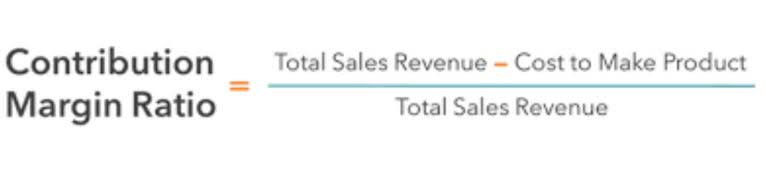
EBITDA is often used as a quick way to determine a company’s profitability, as it excludes financing and other expenses. EBITDA can be calculated using either the net income method or the operating income method. In some cases, the formulas can generate two different EBITDA figures for the same company, as net income and operating income are calculated differently. Next, depreciation and amortization are added back in from the statement of cash Balancing off Accounts flow. EBITDA also adds amortization costs back in, which expenses intangible assets like patents, service contracts, software, licensing agreements, and copyrights.
- Compared to net income or other accrual accounting-based measures, free cash flow is more appropriate for showing a company’s potential to produce cash.
- CFI is the global institution behind the financial modeling and valuation analyst FMVA® Designation.
- Increases in liabilities or equity typically lead to positive CFF, while decreases from repayments or buybacks result in negative CFF.
- In order to move the asset off the balance sheet over time, it must be expensed and moved through the income statement.
- Calculating cash flow to creditors is an essential financial management task for businesses and investors.
- A high positive value often demonstrates financial strength and a commitment to conservative financing.
- By analyzing its cash flow to creditors, lenders can assess whether the company has sufficient cash inflows to cover interest payments and repayments.
Implement technology that integrates billing with service delivery confirmation, guaranteeing accuracy and speed. Furthermore, consider dynamic adjustments to standard payment terms based on customer size or historical promptness. The countdown to payment begins the moment the client receives a correct, timely invoice. Delays or errors in the invoicing process are direct contributors to an unnecessarily high AR days metric. Putting cash flow strategies into practice requires more than spreadsheets—it requires a centralized treasury view. Teams that manage liquidity effectively don’t just track balances; they actively control how cash is positioned, forecasted, and deployed across the business.